
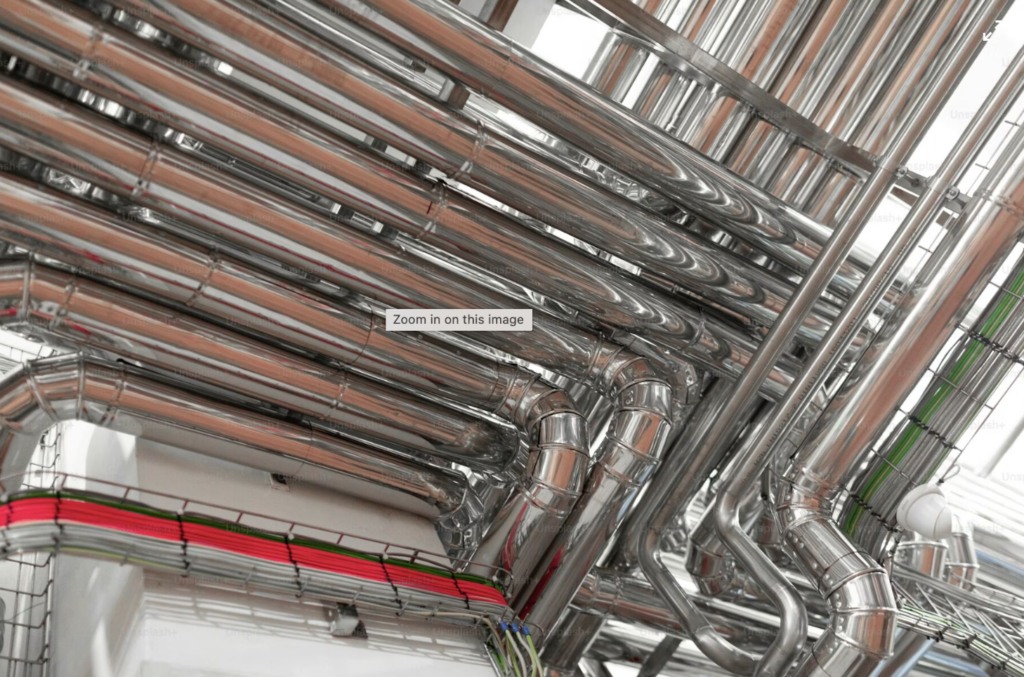
Europe’s shift to climate-neutral heating depends on smarter, more efficient thermal systems. Modern heat networks operate at lower temperatures, use advanced heat pumps, and rely on intelligent control systems that balance supply and demand in real time. These engineering improvements drastically cut energy losses and make it easier to integrate waste heat, renewables, and other local sources into urban heating grids.
Next-generation networks combine digital monitoring, predictive controls, and optimised hydraulics to increase efficiency and reduce operational costs. By operating at low temperatures, they require less energy, enable wider use of low-grade heat, and stimulate the development of the heat pump market. These combined systems are designed to be modular, scalable, and future-proof — allowing cities to expand their heat grids as new sources become available.
HURRICANE Project applies these innovations to explore how ArcelorMittal Belgium‘s waste heat can feed a highly efficient, low-temperature network for the surrounding region. By testing advanced heat-exchange technologies, monitoring tools, and energy-efficient configurations, the project demonstrates how data-driven engineering can unlock cleaner, smarter, and more resilient heating systems for Europe.
hashtag#WasteHeatRecovery hashtag#DistrictHeating hashtag#EnergyTransition hashtag#IndustrialSymbiosis hashtag#HURRICANEproject hashtag#CircularEnergy hashtag#ClimateNeutralIndustry hashtag#SustainableCommunities hashtag#ArcelorMittalBelgium
Leave a Reply